Appearance
Best Genogram Software: EasyGenogram vs. 6 Alternatives
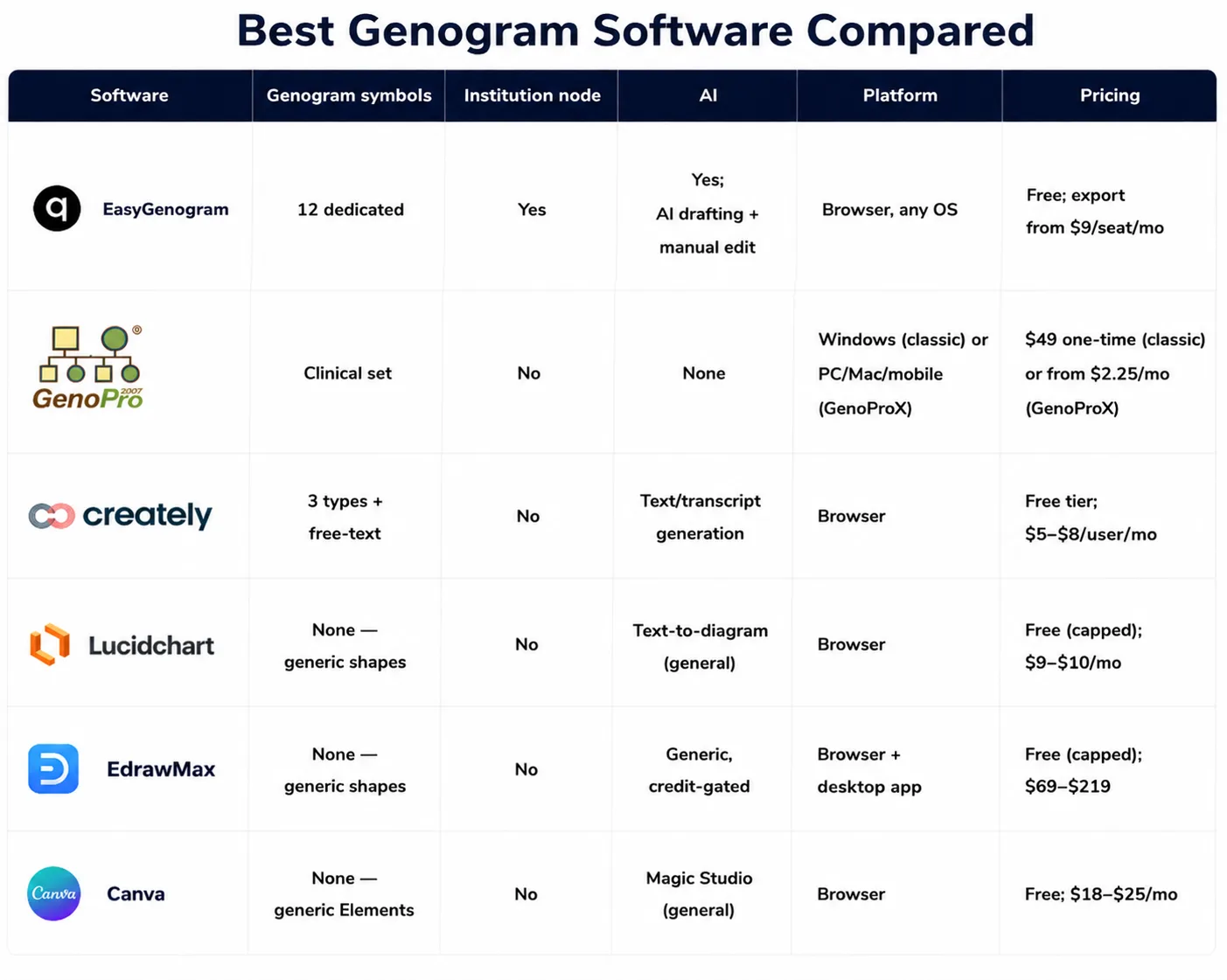
EasyGenogram is the best genogram software for clinical, casework, and coursework genograms because the symbol system, relationship lines, and structured fields are built in. This guide compares it with genealogy apps and general diagramming tools so you can choose based on accuracy, speed, collaboration, and export needs.
Quick Picks by Category
- Best overall: EasyGenogram
- Best free: EasyGenogram; uncapped, free for students.
- Best for casework and therapists: EasyGenogram; has an institution node.
- Best offline desktop: GenoPro; Windows-only classic app, $49 one-time.
- Best for genealogy research: GenoPro; GEDCOM support.
- Best AI-assisted workflow: EasyGenogram; generate a draft from text, refine with instructions, then edit manually.
Genogram Software Compared
Software Reviews
EasyGenogram is built specifically for genograms; dedicated symbols, an Institution node for system involvement, AI generation from plain-language descriptions, follow-up instructions for refinement, and a custom connection builder for relationships that don't fit a preset. Best for therapists, social workers, and students who need a genogram as the actual deliverable.
GenoPro is desktop genealogy and genogram software with GEDCOM support, sold as a classic one-time-purchase app (Windows-only) or as GenoProX, a newer multiplatform subscription. Best for genealogy research or offline desktop use. Full comparison: EasyGenogram vs GenoPro.
Creately is a visual collaboration workspace with genogram templates alongside hundreds of other diagram types. Best for teams that already use it for broader visual work. Full comparison: EasyGenogram vs Creately.
Lucidchart is an enterprise diagramming platform with a generic kinship-diagram template rather than genogram-specific notation. Best for teams already standardized on Lucidchart for other diagrams. Full comparison: EasyGenogram vs Lucidchart.
EdrawMax is a general diagramming suite where genogram is one of hundreds of template types, not a first-class category. Best for users who need many other diagram types beyond genograms. Full comparison: EasyGenogram vs EdrawMax.
Canva is a design tool with decorative family-tree templates and no clinical notation. Best for a casual, non-clinical family sketch. Full comparison: EasyGenogram vs Canva.
For a broader category-level decision, compare EasyGenogram vs general diagramming tools before choosing a specific app.
If your real goal is ancestry or family history instead of clinical notation, start with EasyGenogram vs family tree software and then review EasyGenogram vs FamilyEcho.
Can You Use a Word Processor Instead?
Microsoft Word has an Insert > Shapes tool but with no genogram symbols or relationship-line notation. Full comparison: EasyGenogram vs Microsoft Word.
Google Docs has a Drawing tool with the same limitation; generic shapes and no clinical notation. Full comparison: EasyGenogram vs Google Docs.
For quick intake notes, classrooms, or in-session sketches, compare EasyGenogram vs paper genograms before deciding whether the diagram needs to stay editable.
Build your genogram using EasyGenogram.
FAQ
What is the best genogram software?
EasyGenogram, for clinical and casework use specifically. It includes dedicated genogram symbols, an Institution node, and no size cap, and it's free to start building.
What is the best free genogram software?
EasyGenogram because it has no cap on genogram count or people per genogram, and it's free for verified students. Other tools offer free tiers, but most cap genogram count, shape count, or export formats.
What software do therapists use for genograms?
Therapists commonly use dedicated genogram tools like EasyGenogram for casework, or GenoPro for offline desktop work. General diagramming tools are used less often since they lack genogram-specific notation.
Can I create a genogram in Word or Google Docs?
Yes, but both require manually drawing and labeling generic shapes with no genogram-specific symbols or relationship-line notation, which is far slower than a purpose-built tool.
Is GenoPro still worth using in 2026?
It depends on the need. GenoPro remains an option for offline Windows desktop use or genealogy research with GEDCOM support, but genogram-building specifically is either included in the dated classic app or gated behind a paid tier in the newer GenoProX.
What's the difference between genogram software and family tree software?
Family tree software focuses on lineage and ancestry. Genogram software adds relationship notation, emotional connections, and case-specific fields like health conditions on top of the family structure.