Appearance
Genogram Adoption Symbol
The adopted child symbol in a genogram is a dashed blue line connecting the child to their adoptive parents. The child keeps their standard person symbol, such as a square or circle, while the line explains the legal or family placement relationship. This guide shows when to use it and how it differs from biological and foster child lines.
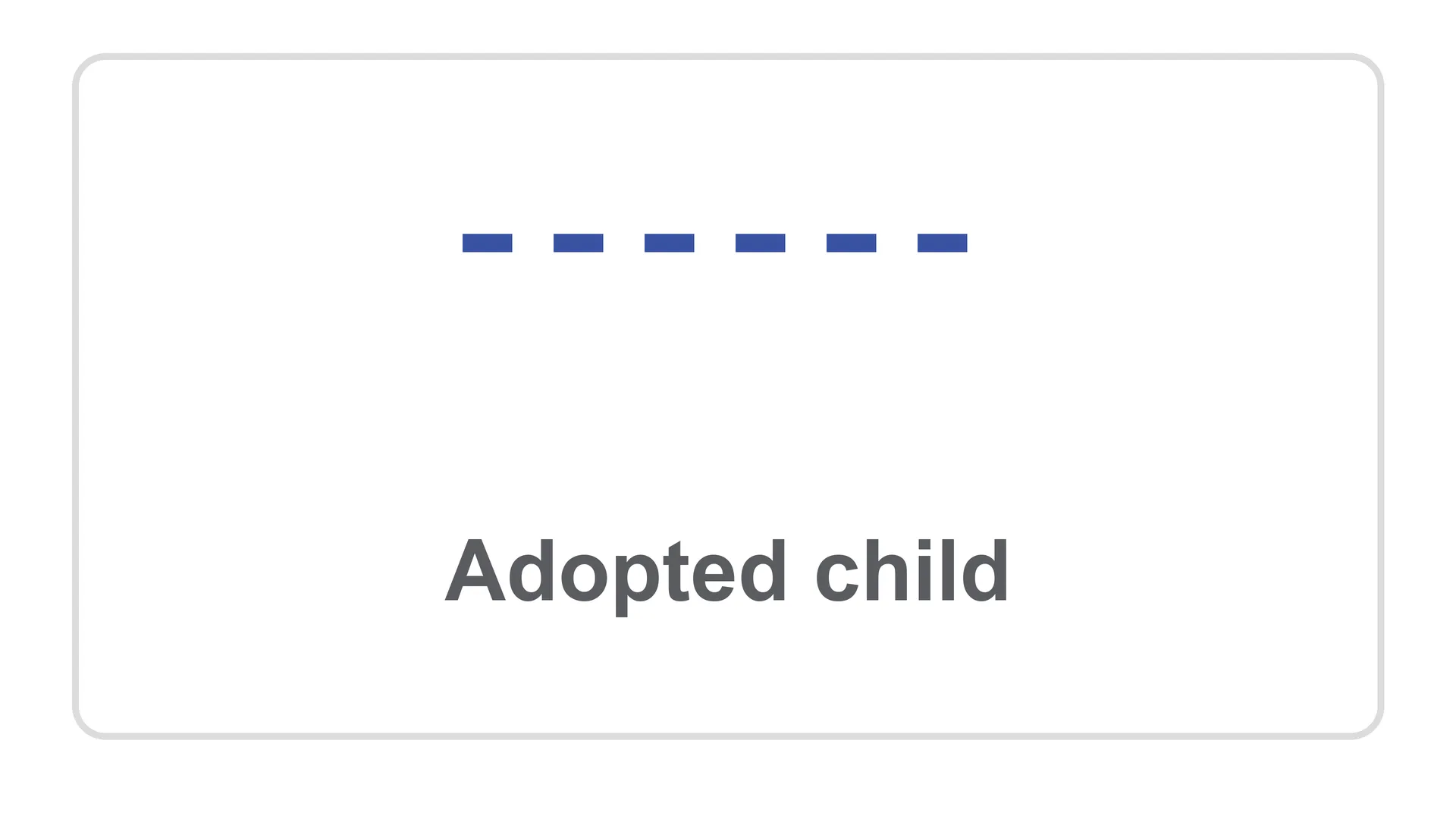
How It Differs from Other Child Connection Lines
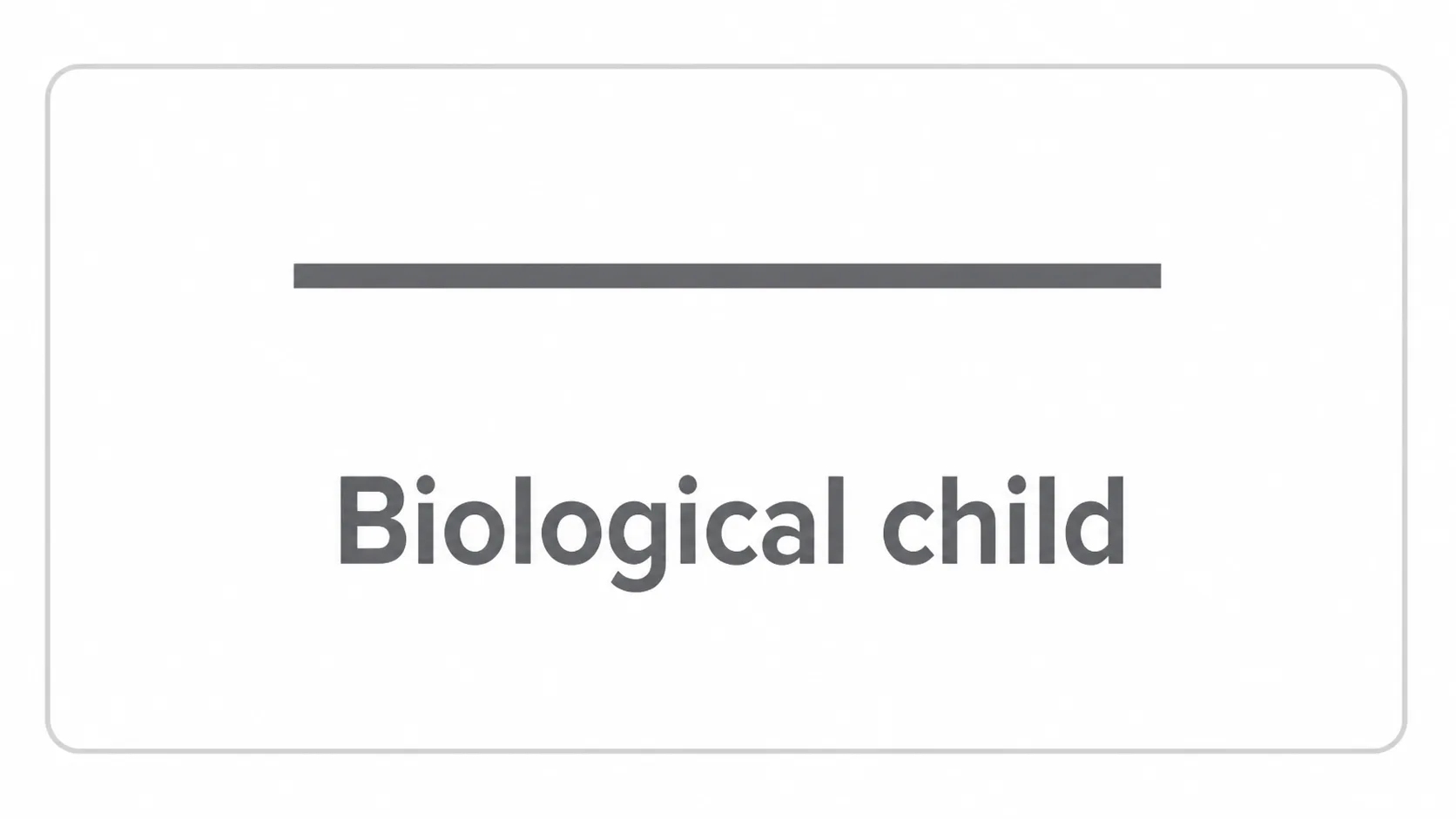
- Biological child: solid black line
- Adopted child: dashed blue line
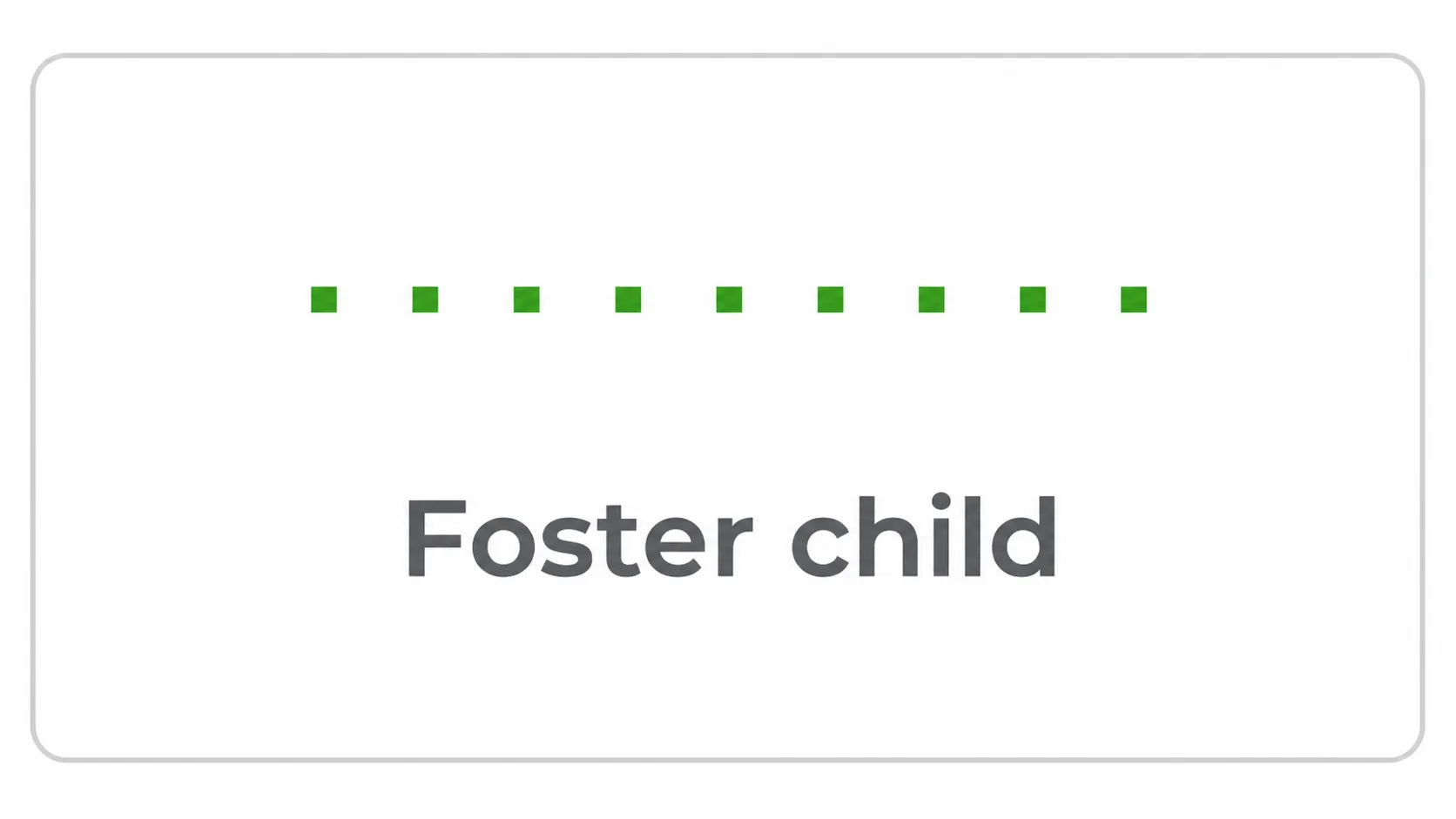
- Foster child: green dotted line
The distinction matters in any diagram that includes a child with more than one type of family connection.
For instance, a child who was fostered before being adopted would appear with a dotted line to prior foster carers and a dashed line to the adoptive parents.
How to Use It
Place the adopted child on the sibship line in chronological order of joining the family, alongside any biological siblings.
Connect them to the adoptive parents' couple line with a dashed blue line.
Biological parents, when known, are shown separately in the diagram, outside the adoptive household, with their own biological connection line to the child.
If a biological parent is unknown, a symbol is still placed in the correct position and labeled unknown rather than left empty.
If the arrangement is an open adoption with ongoing contact, add a separate relationship line between the birth parent and the child.
The line style reflects the quality of that contact, a solid line for consistent, positive contact, a dashed or stressful line for infrequent or complicated contact.
In Context
The Lawson family genogram in the adoption genogram article shows Ben connected to his adoptive parents, Tom and Karen, by a dashed blue line, alongside his biological sister Emma who is connected by a solid line.
His birth mother, Sarah, is shown separately with an open adoption contact line, and his birth father appears as an unknown symbol.
The article also shows how the symbol works alongside a biological child connection on the same sibship line.
FAQ
What is the genogram symbol for an adopted child?
An adopted child is shown with a dashed line connecting them to their adoptive parents, running down from the couple's horizontal line to the child's symbol. In EasyGenogram, this is a dashed blue line. The child's symbol itself is a standard square for male or circle for female; there is no separate person symbol for adopted children.
How is the adopted child symbol different from the foster child symbol?
The adopted child connection is a dashed blue line; the foster child connection is a green dotted line. The dashed line indicates a permanent legal relationship where the child has been legally transferred to the adoptive family. The dotted line indicates a temporary placement where the biological parents remain legally connected. Both use the same standard person symbols.
Where does the adopted child go on a genogram?
On the sibship line below the adoptive parents, in chronological order of joining the family alongside any biological children in the household. If the child has known biological parents, they appear separately outside the adoptive household with their own connection line to the child.
How do you show a child who was fostered and then adopted?
The child appears once on the diagram. Their connection to any prior foster carers is shown with a dated dotted line. Their connection to the adoptive parents is shown with a dashed line. Both lines connect to the same child symbol, and the dates make the sequence clear.
Do you need to show the adopted child's biological parents?
In clinical and social work contexts, yes, when they're known. Biological parents are placed outside the adoptive household with a biological child line connecting them to the child. If their identity or whereabouts are unknown, a symbol labeled unknown is placed in the correct position rather than left out.