Appearance
3-Generation Genogram Example
A 3-generation genogram is the standard format when you need to see patterns across a family, not just the current household. Three generations are usually enough to show repeated health conditions, relationship dynamics, and behaviors that a two-generation diagram would miss.
Why 3 Generations?
A two-generation diagram shows structure. A three-generation genogram starts to show transmission across the family.
For example, a health problem might be in a grandfather and then his son, or a certain way of relating to people might recur, or a certain way of dealing with problems is done by everyone, even though nobody actively chose to pass it on.
If you’re trying to identify these kinds of patterns across a family, two generations usually aren’t enough; this is where a 3-generation genogram becomes necessary.
3-Generation Genogram Example: Basic Structure
3-Generation Genogram Example: Basic Structure
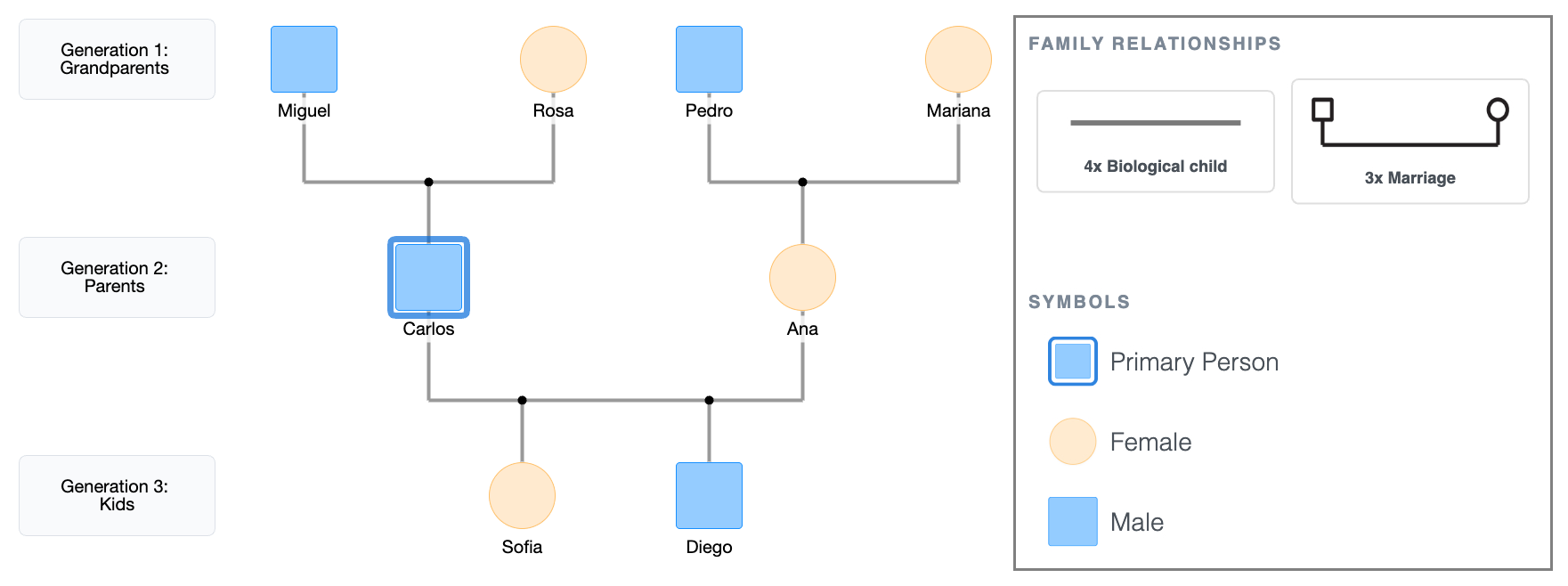
This is a very simple example of a 3-generation genogram. It has three rows and shows three generations of family.
- 1st row: Miguel and Rosa (Paternal grandparents), and Pedro and Mariana (Maternal grandparents)
- 2nd row: their children, Carlos (the primary person) and his wife, Ana.
- 3rd row: Carlos and Ana’s children, Sofia and Diego.
Right now, this genogram only shows who the family members are and how they’re related to each other. There’s no information about anyone’s health, how close they are to each other, or anything beyond the basic family relationships. If you just need to show the structure of the family going back three generations, this is all you’d need to do.
3-Generation Genogram Example: Basic Structure
Explore this genogram and adapt it to your needs.
3-Generation Genogram Example: Adding Health History
3-Generation Genogram Example: Adding Health History
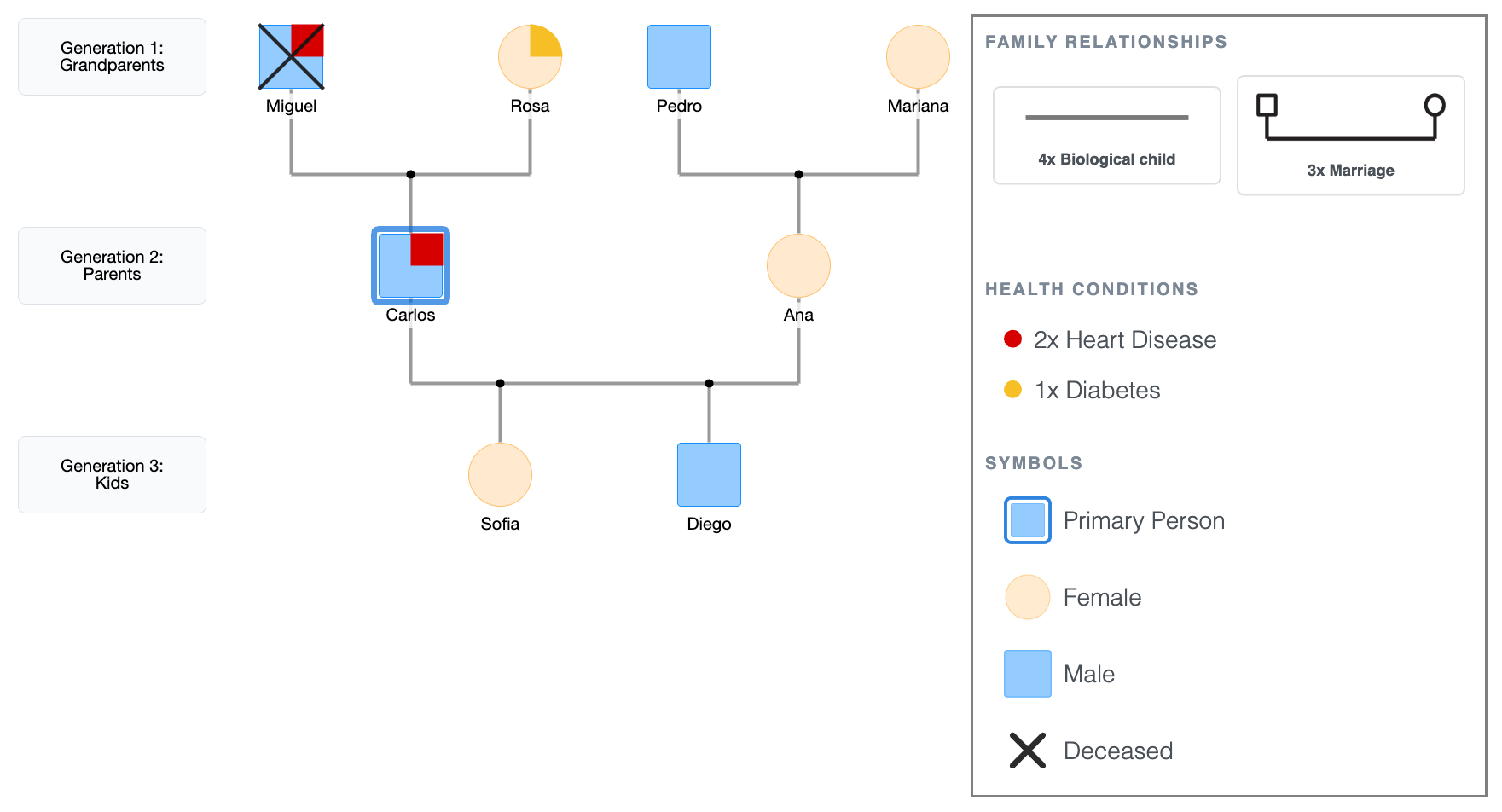
Here’s that same family from example 1, but this time, with health problems included.
- Miguel, the paternal grandfather, had heart disease and passed away.
- His son Carlos has heart disease.
- Rosa, the paternal grandmother, has diabetes.
This is where a 3-generation genogram becomes useful; you can immediately see that heart disease appears across generations.
3-Generation Genogram Example: Adding Health History
Explore this genogram and adapt it to your needs.
3-Generation Genogram Example: Adding Relationship Lines
3-Generation Genogram Example: Adding Relationship Lines
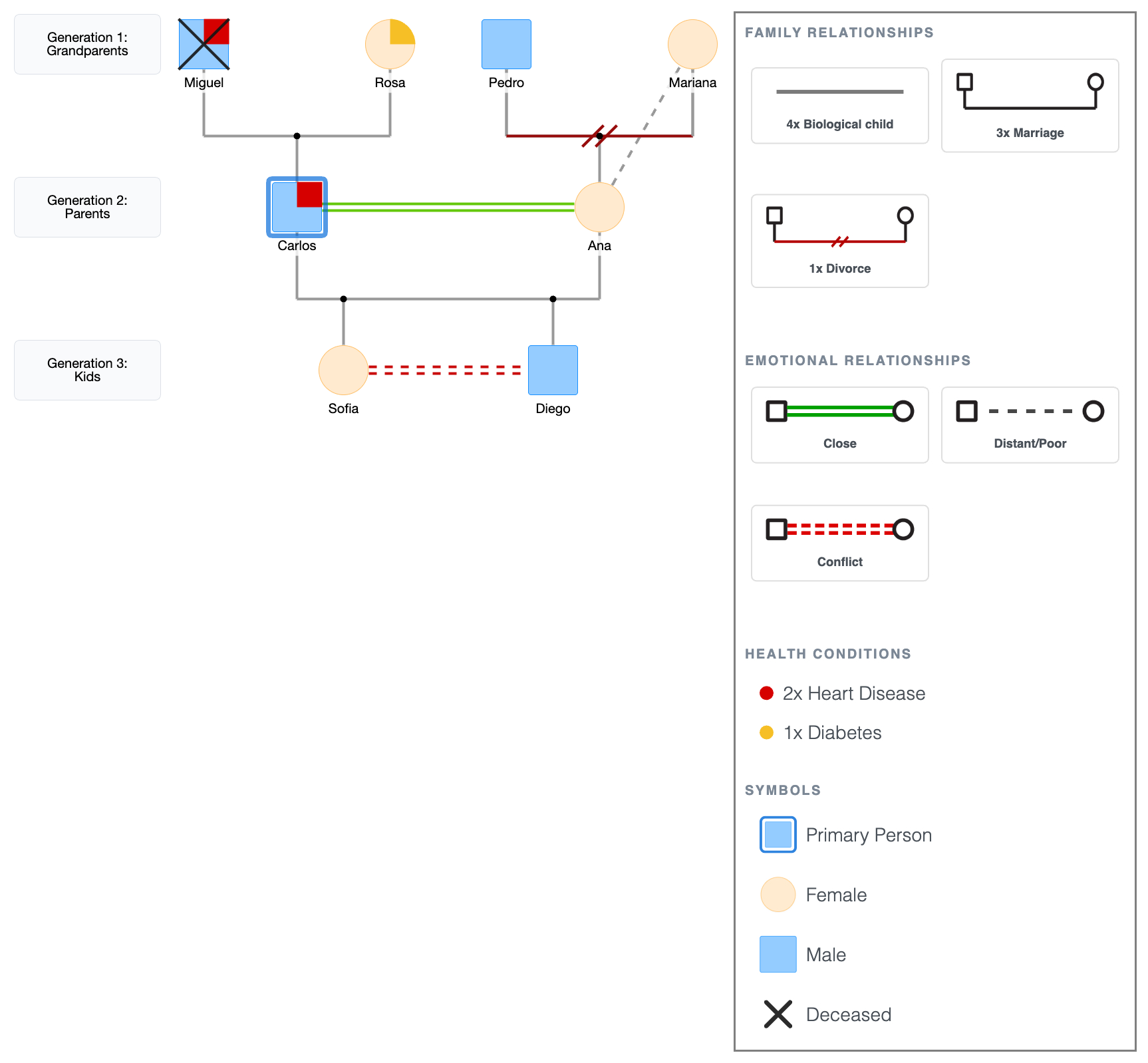
From this diagram, you can see:
- Carlos and Ana are very close to each other, and the heavy line connecting them on the diagram shows this.
- Ana, however, isn’t close to her mother, Mariana. The dotted line between them shows this distance.
- Sofia and Diego are in conflict with each other, shown by the two dotted lines.
- Pedro and Mariana are divorced.
With two generations, this looks like a single case, but with three, you can see the pattern.
3-Generation Genogram Example: Adding Relationship Lines
Explore this genogram and adapt it to your needs.
When to Use a 3-Generation Genogram
A 3-generation genogram is a good idea in certain situations.
- You’ll probably need one for a school project, because it’s something they very commonly ask for in nursing, social assessment, psychology, and counseling courses.
- It’s useful during a first meeting with a client or when looking at a whole family, because you’re looking for what repeats in the family, not just who everyone is.
- When you are charting a family’s medical past, it helps you see if an illness happens only in one person or if it tends to recur.
- Finally, use one if you are hoping to get a better grasp of your own family, considering not only who the members are, but what kinds of things happen repeatedly throughout the family’s history.
When You Don’t Need One
- If all you want to do is display family members and their relationships with each other, a basic 2-generation genogram is sufficient. A three-generation chart is only worth the effort if you’re specifically trying to find any trends.
- If you don’t have a lot of definite details about the grandparents, begin with the information you do know. A neat two-generation genogram is much better than a three-generation one filled with assumptions.
Build Your Own 3-Generation Genogram
You can edit any of the 3 examples above in EasyGenogram, or build yours from scratch.
1. Add your primary person: Start with whoever the genogram is about. Drop them into the middle row, and build everything else around them.
2. Add parents and siblings: Place parents in the row above, connected by a marriage line. Add siblings beside the primary person in the same row.
3. Add grandparents: Go up one more level. Add both sets of grandparents and connect them to their children.
4. Layer in the details: Add health conditions, ages, and any significant events such as deaths, divorces, separations. Do this after the structure is in place, not during.
5. Add relationship lines: Draw the emotional connections like close bonds, conflict, and distance. This is what turns a family diagram into a genogram.
6. Export your genogram: When you're done, download it as a PDF or PNG; ready to submit for an assignment or share with a client.
FAQ
What is a 3-generation genogram?
A 3-generation genogram is a family diagram that maps three levels of a family: grandparents, parents, and children. It’s the standard minimum for clinical and academic work because three generations are usually enough to spot meaningful patterns such as recurring health conditions, relationship dynamics, and behavioral traits that show up across generations.
Who is included in a 3-generation genogram?
The three generations are usually grandparents, parents, and the primary person (with their siblings). Spouses or partners of each generation are included, too, along with any relevant details like health conditions, ages, and relationship types.
What's the difference between a 2-generation and a 3-generation genogram?
A 2-generation genogram shows parents and children, which is useful for mapping basic family structure. A 3-generation genogram adds grandparents, which is where patterns start to become visible. Most clinical settings require at least three generations for this reason.
What symbols are used in a 3-generation genogram?
Squares represent males, circles represent females. A horizontal line between two people means they’re married, and vertical lines connect parents to children. Additional symbols show divorce, death, health conditions, and relationship quality.
Can I create a 3-generation genogram online?
Yes. EasyGenogram lets you build one directly in your browser; you can add family members, connect them, layer in health history and relationship lines, then export as PDF or PNG.
Sources
- "Genograms for Psychotherapy"
- "Family History: The Three-Generation Pedigree"