Appearance
Genogram Limerence Symbol
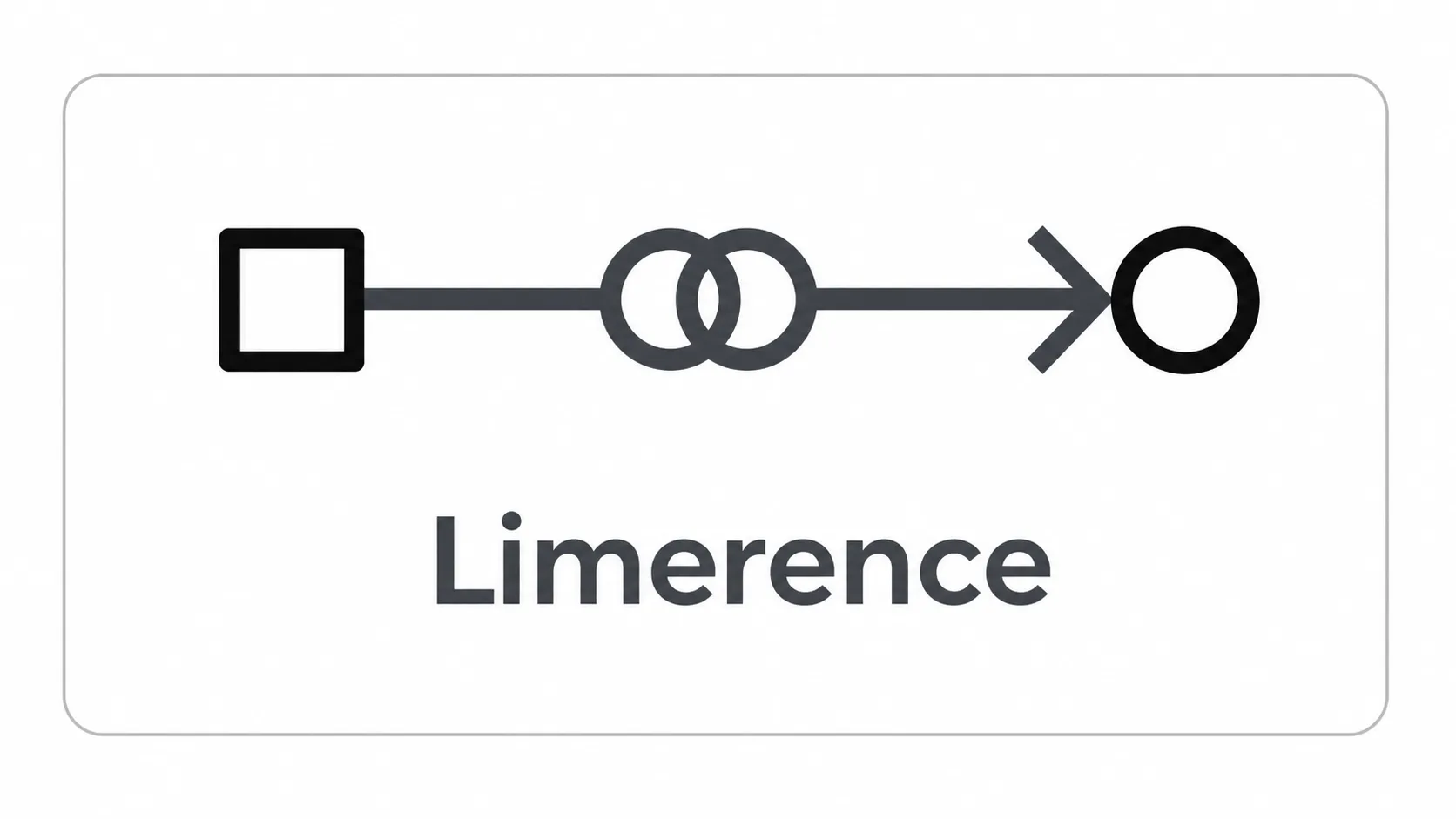
The limerence relationship symbol is shown as a line with two interlocking circles and a directional arrow pointing toward the object of fixation. Use it when one person's intense preoccupation or romantic fixation is clinically relevant. This guide explains how limerence differs from love, being in love, and focused attention.
Limerence Symbol Example in a Genogram
Limerence Symbol Example in a Genogram
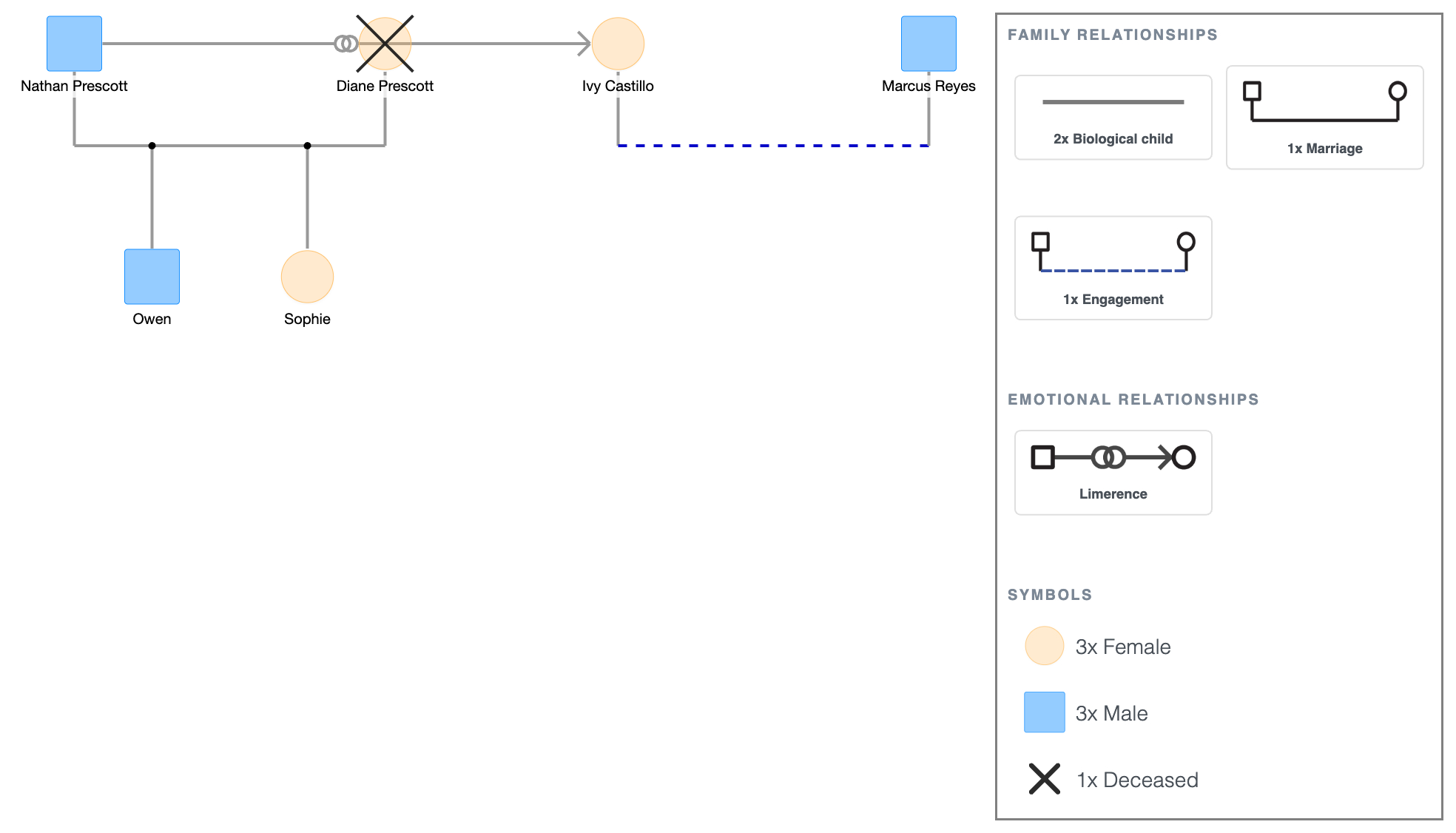
Nathan Prescott is a widower; his wife, Diane Prescott, is deceased, and they have two children, Owen and Sophie.
Despite this, Nathan has an intense, unreciprocated fixation on Ivy Castillo, who is engaged to her partner, Marcus Reyes.
The limerence line runs from Nathan across to Ivy, with the arrow pointing toward her, independent of both of their existing family structures.
Limerence vs. Love vs. In Love
Limerence sits in the same "positive" group as Love and In Love, but it marks something different.
Love and In Love describe a settled, generally mutual bond.
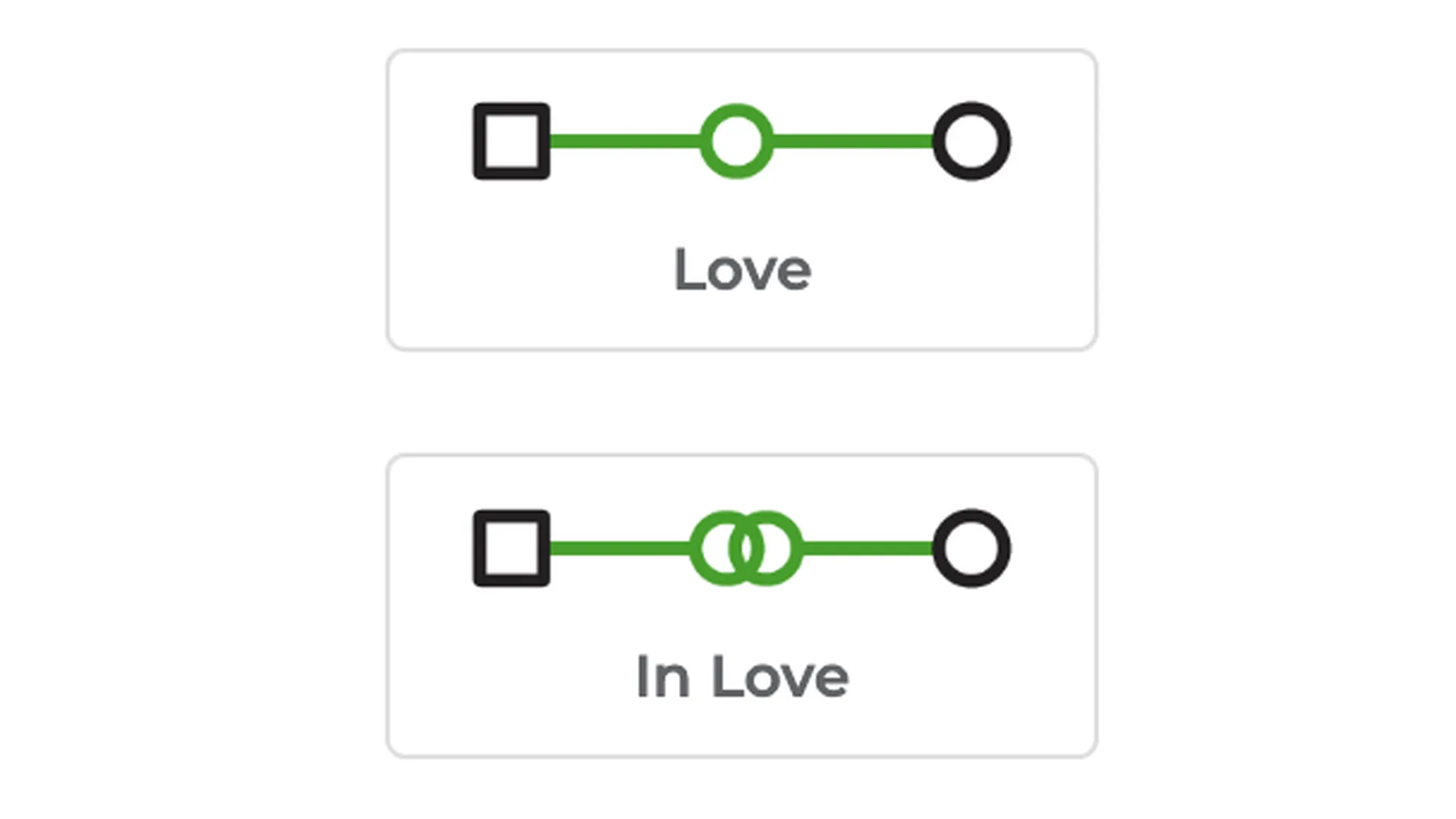
Limerence describes an involuntary, often one-sided fixation, preoccupying for the person experiencing it, whether or not it's returned.
Using Love or In Love for a one-sided fixation overstates how mutual the dynamic actually is.
Limerence keeps that distinction visible on the diagram.
How to Add It in EasyGenogram
Select the relationship line between the two people and choose Limerence from the emotional line set.
Click the person experiencing the fixation first, then the person they're fixated on, so the arrow points the correct direction.
Limerence Symbol Example in a Genogram
Explore this genogram and adapt it to your needs.
FAQ
What does the limerence symbol look like on a genogram?
A line with two interlocking circles, with a directional arrow pointing from the person experiencing the fixation toward the object of it.
How do you show who is fixated on whom?
The limerence line is directional. Click the person experiencing the limerence first, then the object of the fixation, so the arrow points from the first to the second.
What's the difference between limerence and love on a genogram?
Love and In Love describe a settled, generally mutual bond. Limerence describes an involuntary, often one-sided fixation that may or may not be reciprocated.
Is limerence always one-sided?
Not always, but the symbol is most often used for one-sided or unequal fixations, since that's the dynamic it's built to capture.
Can limerence be shown as mutual?
Yes, but since the line is directional, showing it as mutual means adding the line twice, once for each direction.