Appearance
Genogram Divorce Symbol: How to Show Divorce in a Genogram
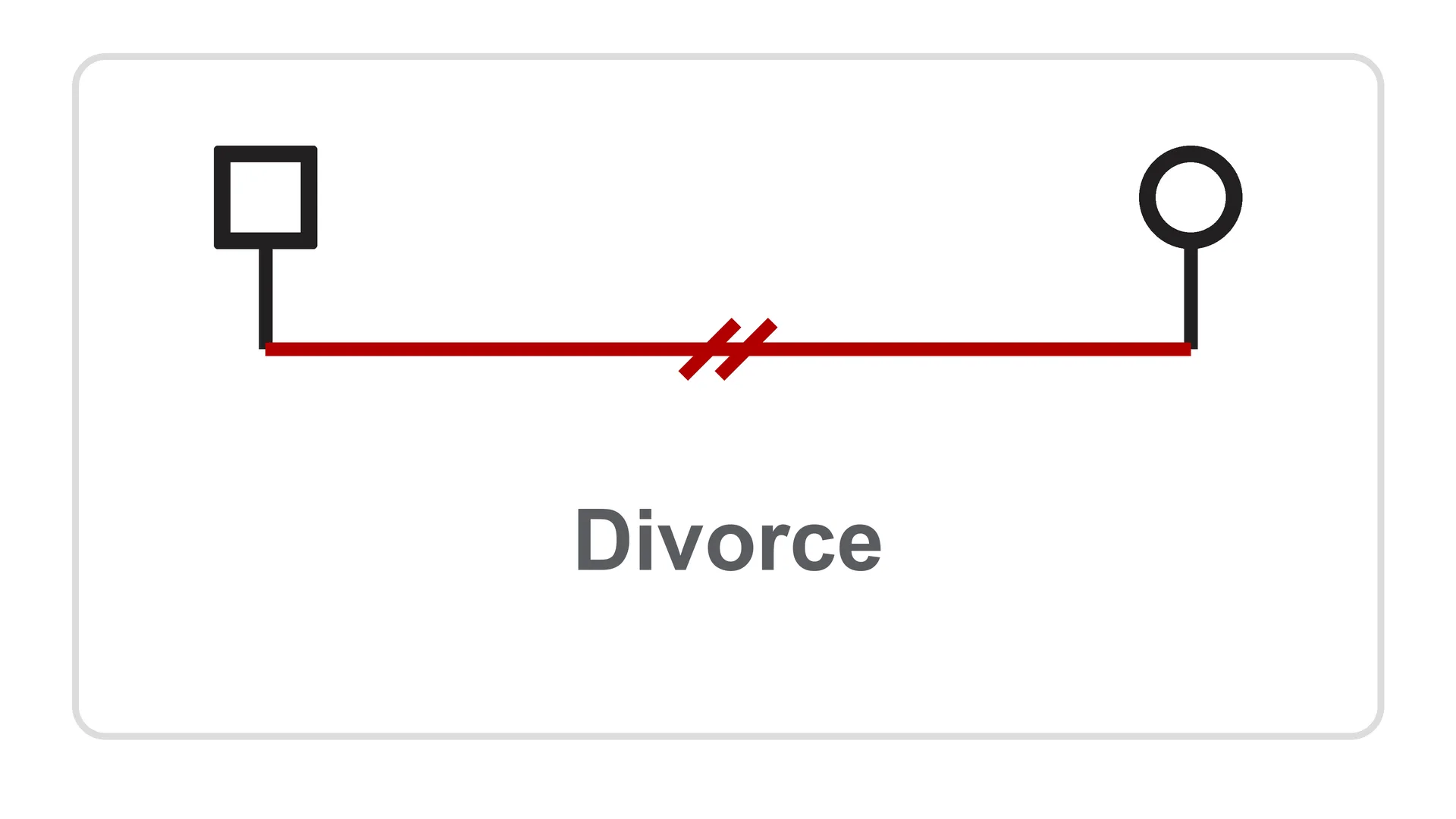
The divorce symbol is shown with two diagonal slashes through the horizontal marriage line connecting a couple. Use it when the relationship was legally ended, while keeping the former couple's shared family structure visible. This guide explains the notation, how it differs from separation, and how to show remarriage.
The marriage line stays visible underneath the slashes, so the genogram still records that the marriage happened, it just also shows how it ended.
A Divorce Symbol Example in a Genogram
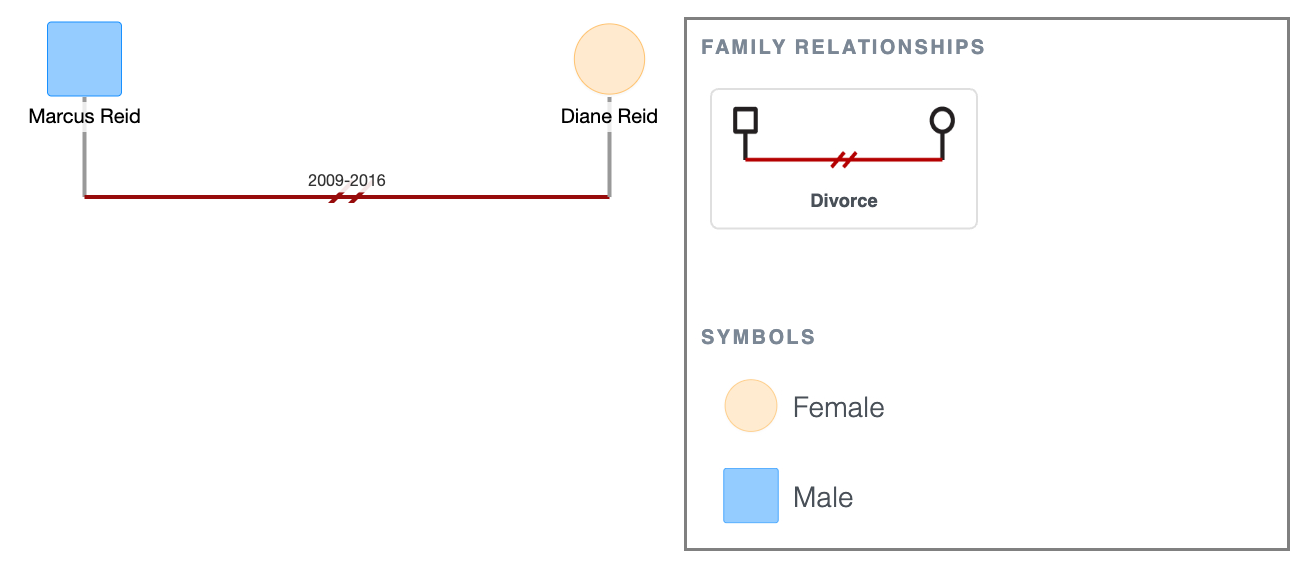
Marcus Reid and Diane Reid married in 2009.
The relationship ended in divorce in 2016, shown as two slashes through their marriage line, with "2009 - 2016" noted on it as tags.
A Divorce Symbol Example in a Genogram
Divorce vs. Separation
In EasyGenogram, the symbols for divorce and separation are distinguished:
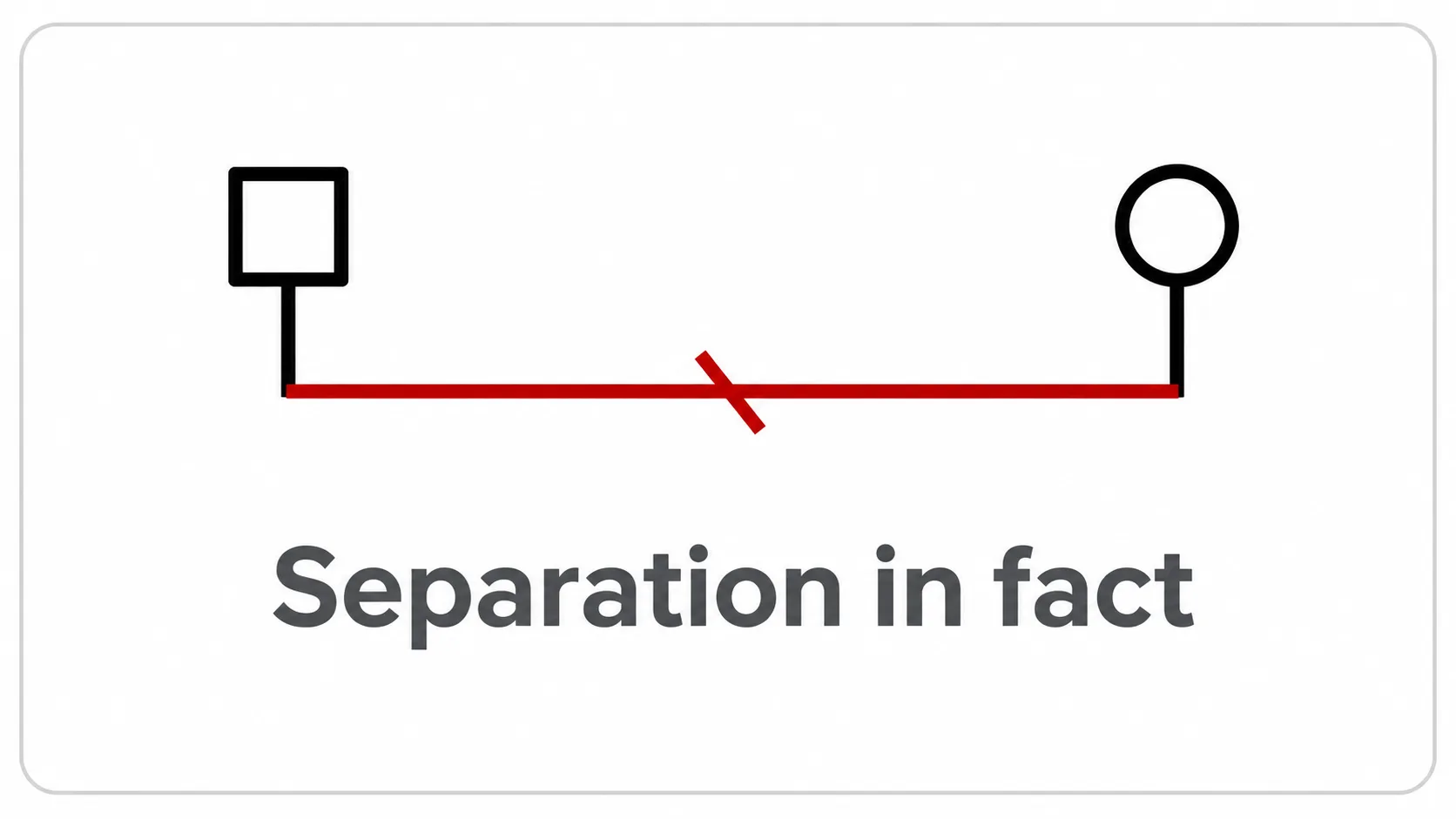
- Separation in fact: shown as a left-to-right slash through the marriage line. The couple is living apart, informally, with nothing filed or legally documented.
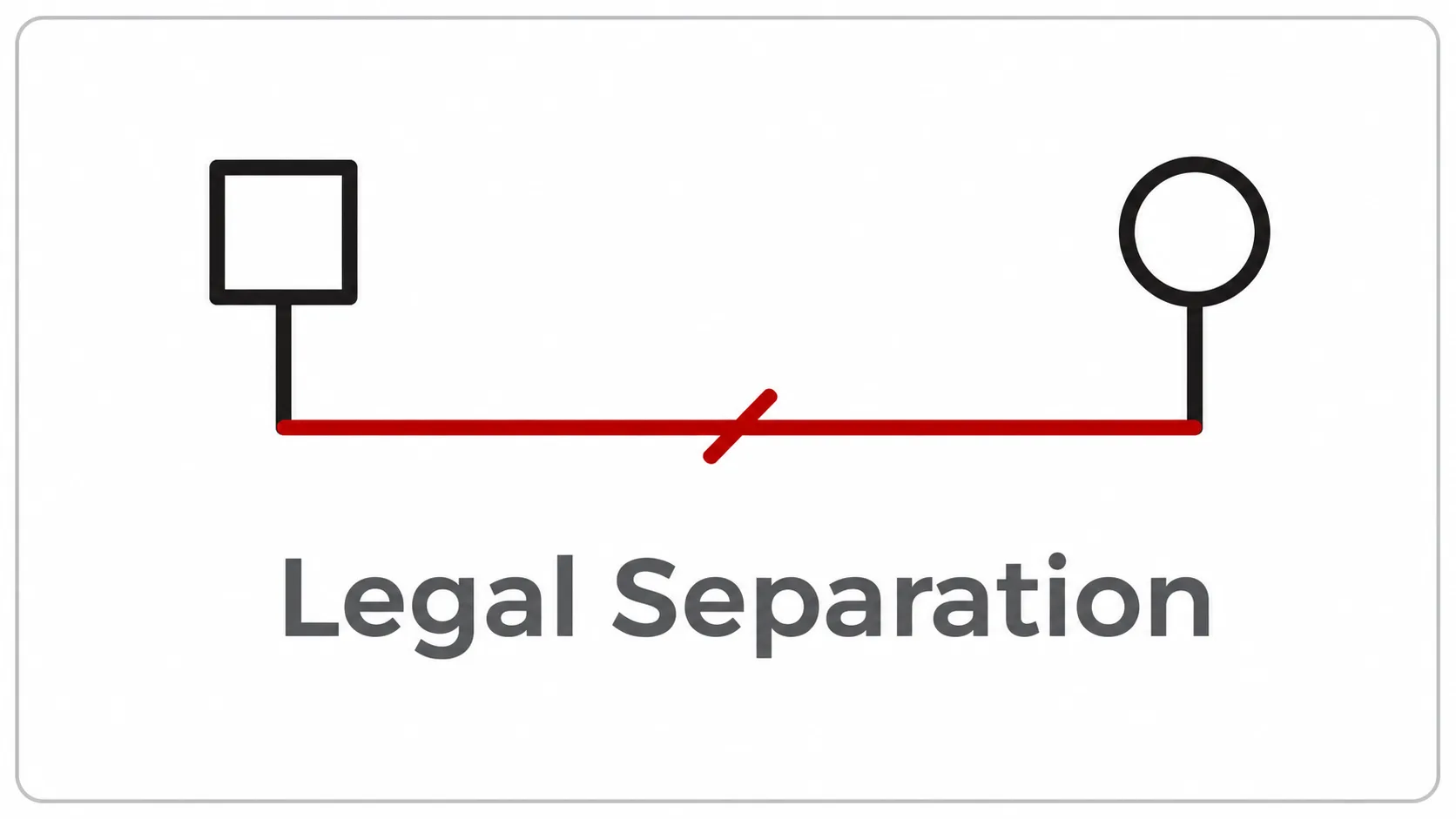
- Legal separation: shown as a right-to-left slash through the marriage line. The couple has formally filed for separation through the courts, but the marriage hasn't been legally dissolved.
- Divorce: the marriage has been legally dissolved.
Clinically, this distinction marks how far along the process actually is.
A separation in fact can still fully reverse with no legal record of it ever happening. Separated couples may still reconcile, or may carry unresolved attachment dynamics that show up elsewhere in the family pattern.
A legal separation is already partway through a formal process, even though the marriage technically still stands.
Divorce is the only one of the three that's final.
Remarriage After Divorce
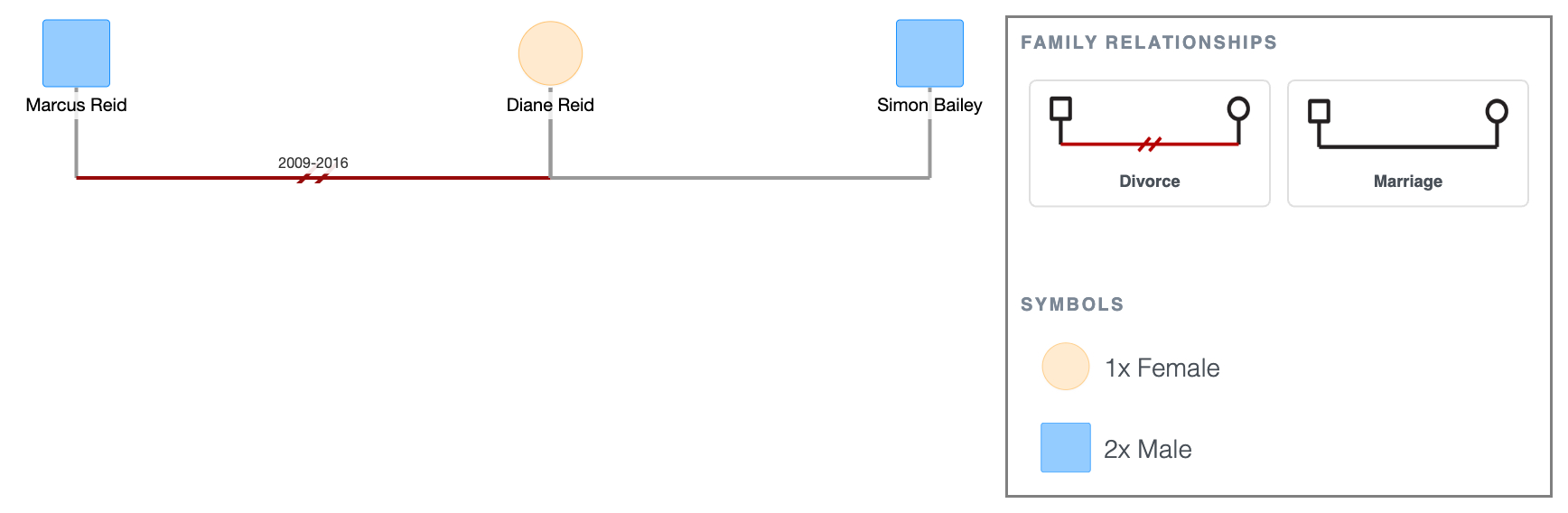
If either partner remarries, the marriage line continues out to the new partner, dated separately from the first marriage.
This keeps the full relational history visible on one genogram instead of losing earlier marriages when a new one is added.
For instance, if Diane Reid remarries Simon Bailey, this is how it will be depicted:
Remarriage After Divorce Symbol in a Genogram
How to Add It in EasyGenogram
Select the relationship line between the couple, mark it as divorced, and add the respective start and end dates.
The line updates to show the standard two-slash notation automatically, so you're not drawing it by hand.
Remarriage After Divorce Symbol in a Genogram
Explore this genogram and adapt it to your needs.
FAQ
What's the difference between the separation and divorce symbols?
A left-to-right slash means separation in fact; living apart, nothing filed. A right-to-left slash means legal separation; formally filed, but still legally married. Two slashes through the line mean divorce; meaning the marriage has been legally dissolved.
Do I still include the marriage if the couple later divorced?
Yes. The marriage line stays on the genogram, with the divorce slashes added through it. Removing the line entirely would erase part of the family's actual history.
How do I show an annulment?
There's no single universal symbol for annulment across all genogram conventions. Many practitioners note it directly near the marriage line rather than relying on slash count alone.
Where do children appear after a divorce?
Children stay connected to both parents through the same vertical lines as before. A divorce changes the couple's relationship status, not the parent-child connections already on the genogram.
Can I add the divorce date to the symbol?
Yes. Adding dates for the marriage, separation, and divorce turns the symbol into a quick timeline, which is often more clinically useful than the symbol alone.